
A 20ft storage container provides plenty of room, but the way you pack it determines how useful that space remains.
Loading everything without a plan can leave important boxes trapped at the back, create unstable stacks and make it difficult to add or remove belongings later.
A little preparation helps you protect furniture, use the full height of the container and retain safe access to anything you may need during your rental.
📦 Quick answer
- Clean and completely dry everything before it enters the container.
- Place heavy furniture, appliances and boxes at the bottom and towards the back.
- Keep fragile and frequently used belongings higher up or near the doors.
- Use boxes of consistent sizes wherever possible to create safer stacks.
- Leave a narrow access route if you expect to retrieve items during storage.
- Label boxes on more than one side so they remain identifiable when stacked.
This guide explains how to prepare your belongings, plan the container layout and load everything in a sensible order.
Jump to:
What Should You Do Before Packing a Storage Container?
Good container organisation starts before anything reaches the storage site.
Decide What Actually Needs Storing
Avoid using valuable space for broken furniture, empty packaging or items you already intend to dispose of.
Separate everything into four groups:
- Items going into storage
- Items staying with you
- Items being sold or donated
- Items being recycled or discarded
This also reduces the amount of handling required on moving day.
Create a Basic Inventory
Write down the main items and number each box. You do not need to record every individual object, but you should be able to identify where important belongings are stored.
A simple inventory might include:
- Box 1–5: kitchenware
- Box 6–8: books
- Box 9: important household documents
- Box 10–12: winter clothing
- Rear-left corner: bedroom furniture
Keep a copy of the inventory on your phone rather than placing the only version inside the container.
Clean and Dry Everything
Furniture, tools, appliances and boxes should enter storage clean and completely dry. Packing damp belongings can trap moisture and cause smells, staining or mould during a longer rental.
Although every ACS unit is anti-condensation treated, proper preparation remains important. Our guide explaining condensation and damp in storage containers covers this in more detail.
Check That Every Item Is Permitted
Fuel, gas bottles, hazardous chemicals, perishable food and other restricted items must not be stored.
Review our guide to what can and cannot go inside a storage container before loading anything unusual.
How Should You Plan the Container Layout?
Think of the container as a small room rather than one large stack.
Before loading, decide:
- Which belongings will remain in storage until the end
- Which boxes you may need to retrieve
- Where large furniture and appliances will fit
- Whether you need a walkway through the middle
- Which items can safely be stacked
A basic layout prevents you from placing something important behind a full container of furniture and boxes.
| Container Area | Best Used For | Why |
|---|---|---|
| Back wall | Large furniture and items needed last | These belongings will not block items you need regularly |
| Side walls | Furniture, shelving and stable box stacks | Keeps the centre available as an access route |
| Floor level | Heavy boxes, appliances and robust equipment | Provides a stable base and protects lighter belongings |
| Upper levels | Light boxes, cushions and soft belongings | Avoids excessive weight on fragile items |
| Near the doors | Frequently used tools, stock or seasonal items | Allows quick collection without unloading the container |
| Central route | Clear walking access | Makes belongings at the rear easier to retrieve |
If everything will remain untouched until you move out, you can pack more tightly. If you expect regular visits, sacrificing some capacity for an access route will make the unit far more practical.
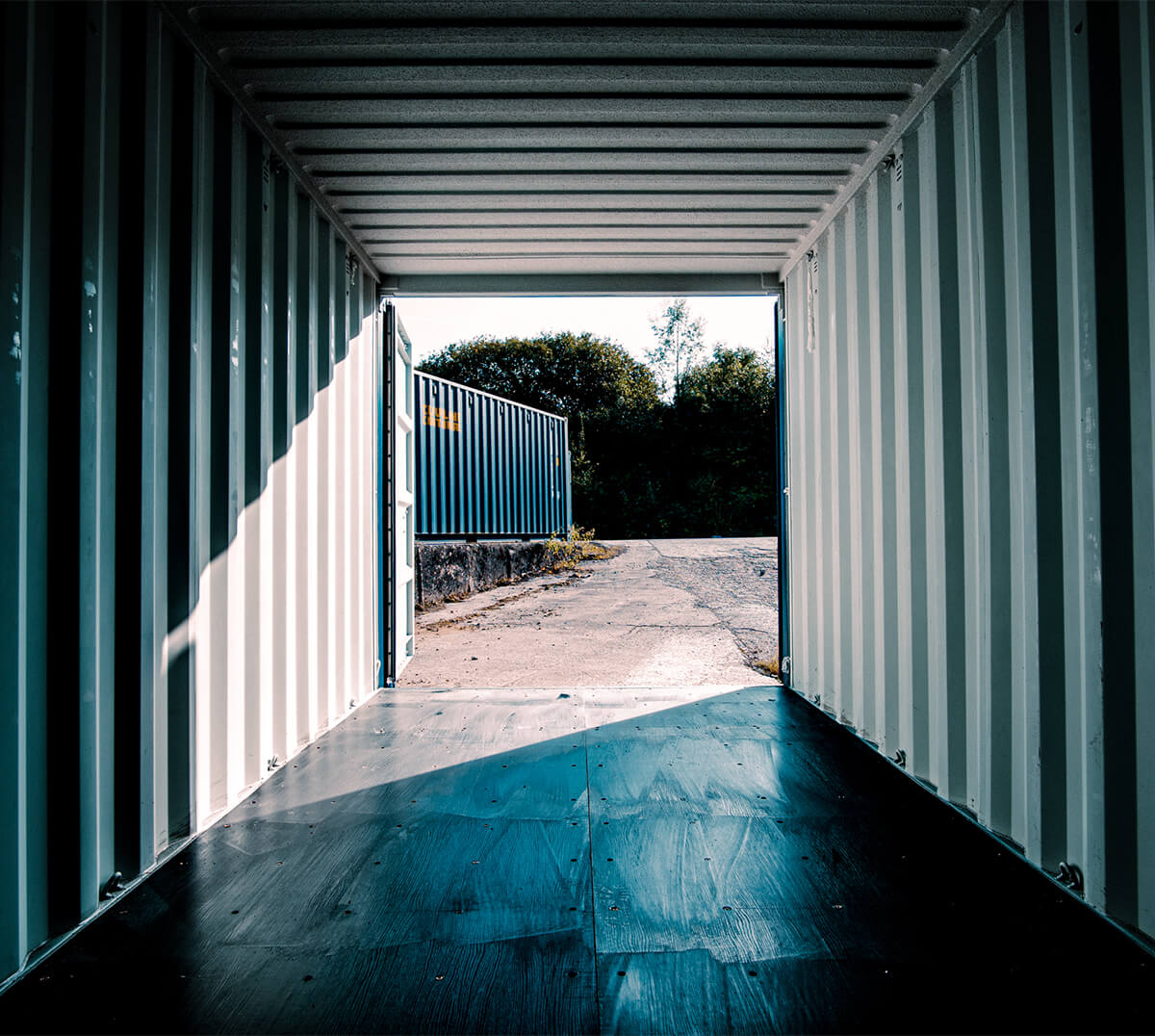
Planning the layout before loading helps you use the floor space and container height effectively.
What Should Go Into a Storage Container First?
Start with the largest and least frequently needed belongings.
A sensible loading order is:
- Large furniture: wardrobes, bed frames, sofas and tables going against the back or side walls.
- Heavy appliances: washing machines, dryers and other robust items positioned at floor level.
- Heavy boxes: books, kitchenware, tools and other dense belongings forming the bottom of stable stacks.
- Medium-weight boxes: general household belongings and packaged stock.
- Fragile or light items: lamps, ornaments, cushions and lighter boxes placed safely on top.
- Frequently needed belongings: seasonal items, documents, tools or stock positioned near the entrance.
Avoid filling the area immediately inside the doors too early. You will need that space to move, turn and arrange later items safely.
How Should You Pack Furniture in a Storage Container?
Furniture is bulky and rarely fits together as neatly as boxes, so preparation can release a surprising amount of space.
- Dismantle bed frames, tables and shelving where practical.
- Keep screws and fittings in labelled bags attached securely to the relevant item.
- Cover upholstered furniture with clean, breathable protective covers.
- Protect corners and polished surfaces with blankets or suitable padding.
- Store mattresses upright only when they are properly supported and will not bend.
- Avoid placing heavy boxes directly on sofas or soft furnishings.
- Keep wooden furniture slightly away from the container walls where possible.
Do not tightly wrap furniture in non-breathable plastic for an extended period, as this can trap moisture against the surface.
For a complete preparation checklist, read our guide on how to prepare furniture for storage.
How Should You Store Household Appliances?
Fridges, freezers, washing machines and dishwashers must be clean and completely dry before entering storage.
Before loading an appliance:
- Empty all food, water and detergent.
- Defrost fridges and freezers fully.
- Clean and dry the interior.
- Drain washing machines and dishwashers.
- Secure loose cables and hoses.
- Protect corners without sealing the appliance in damp plastic.
- Leave doors slightly open to prevent stale smells and trapped moisture.
Appliances should remain upright unless the manufacturer specifically states that another position is safe.
Do not use empty appliances as forgotten storage spaces. If you place lightweight belongings inside, label the appliance clearly so nothing is accidentally left behind.
How Should You Pack and Stack Storage Boxes?
Strong boxes of consistent sizes are easier to organise and stack than a mixture of weak cartons and open bags.
Do Not Overfill Boxes
A box should be full enough to retain its shape but light enough to move safely. Books, tools and kitchenware should be divided between several smaller boxes rather than packed into one extremely heavy container.
Label More Than One Side
Labels placed only on the top disappear as soon as another box is stacked above. Mark at least two outward-facing sides with the contents and room or category.
Build Stable Stacks
Place the strongest and heaviest boxes at the bottom. Lighter and more fragile boxes should sit above them.
Avoid creating stacks so tall that they become unstable or impossible to remove safely.
Fill Empty Gaps Carefully
Soft belongings such as cushions or folded blankets can fill awkward gaps, but avoid forcing items into spaces where they could become crushed or damaged.
Keep Related Items Together
Group boxes by room, business function or type of belonging. This makes the inventory easier to follow and reduces the time spent searching later.
How Should Businesses Organise Stock and Tools?
Businesses and tradespeople often visit their storage unit more frequently than household customers. Organisation therefore matters just as much as capacity.
Useful steps include:
- Position fast-moving stock near the doors.
- Separate returns, damaged goods and sellable inventory.
- Label boxes with product names, quantities or stock codes.
- Keep tools grouped by trade or job type.
- Use suitable freestanding shelving for smaller items.
- Maintain a simple record of stock entering and leaving the unit.
- Leave enough room to retrieve equipment safely.
Avoid turning the unit into an unrecorded overflow space where products become difficult to locate.
Our guide to business stock and equipment storage explains when a container makes sense compared with larger commercial premises.
Should You Leave a Walkway Through the Container?
Leave an access route if there is any chance you will need belongings from the back before the rental ends.
The walkway does not need to be wide, but it should allow you to reach each main section without climbing over boxes or moving large furniture.
If you are packing for a house move and everything will leave together, tighter loading may be reasonable. For long-term storage, business stock or frequently used tools, maintaining access is usually more valuable than filling every square foot.
This is one reason a full-size unit can remain useful even when you do not completely fill it. Our guide asks whether you really need a full 20ft storage container and explains how spare space can improve organisation.
Need Space for Furniture, Stock or Equipment?
Our full-size 20ft containers provide approximately 160 sq ft of drive-up storage space for £150 per month including VAT.

Common Storage Container Packing Mistakes
Loading Without a Plan
Placing items wherever they initially fit often wastes space and blocks belongings you later need.
Storing Damp Belongings
Even a well-maintained container cannot undo moisture already trapped inside furniture, boxes or appliances.
Using Weak or Unlabelled Boxes
Damaged cartons can collapse under weight, while unlabelled boxes make finding individual belongings unnecessarily difficult.
Putting Heavy Items on Top
Heavy boxes can crush clothing, fragile belongings and upholstered furniture. Keep the greatest weight close to floor level.
Blocking the Doors
Leave enough room for the container doors to open and close without catching against furniture or unstable boxes.
Using Every Inch of Space
Completely filling the unit may appear efficient, but it can make safe access impossible. The best-packed container is not always the fullest one.
Forgetting Insurance and Storage Rules
Check that your belongings are permitted and appropriately insured before moving them into storage.
Frequently Asked Questions About Packing a Storage Container
What should I put at the back of a storage container?
Place large furniture and belongings you will not need until the end of your rental at the back. Frequently used items should remain closer to the doors.
Should heavy boxes go at the bottom?
Yes. Strong, heavy boxes provide a more stable base for lighter cartons. Avoid making any box too heavy to move safely.
Can I stack furniture inside a container?
Some furniture can be stacked or dismantled, but it must remain stable and protected. Do not place excessive weight on sofas, mattresses or delicate surfaces.
Should I leave space between belongings and the walls?
Where practical, leave a small gap around furniture and sensitive boxes. This helps airflow and prevents belongings from being pressed against the container walls.
Do I need to leave a walkway?
Leave a walkway if you expect to retrieve belongings during storage. If everything will be removed together at the end, you may choose to pack more tightly.
Can I use shelving inside the container?
Suitable freestanding shelving can help organise boxes, tools and business stock. It should be stable, correctly loaded and removed when your rental ends.
How do I stop furniture becoming damp?
Clean and dry furniture thoroughly, use breathable covers and avoid sealing damp items in plastic. ACS containers are also treated to help control condensation.
What should I keep near the container doors?
Keep anything you expect to collect regularly near the entrance, including seasonal belongings, work tools, documents or fast-moving business stock.
Pack Your Storage Container Properly From the Start
The best way to organise a 20ft container is to plan the layout before loading begins.
Place large and rarely used belongings towards the back, build stable stacks with heavy boxes at the bottom and retain access to anything you may need during the rental.
Every storage container at our Accrington facility provides approximately 160 sq ft of anti-condensation-treated space, with 24/7 drive-up access, monitored CCTV and a protected CISA padlock.